The i16n - AKA Intershitilization
It has become very common for companies, entities, institutes and so on to signal that they care about other cultures and languages. For most of them it simply means more customers, more business, more earnings, so they don’t want to leave that money on the table. In tech it has become common to call this internationalization, by which they just mean translation aware, but sometimes they also mean localization, which additionally means actually translating and converting datetime, units and some other nominal things, see wiki. The thing is, it is entirely about the format, nothing about the content. And boy, do those engineers and product managers love to call it i18n and sound cool! What’s the problem? There are lots of things that a simple translation and unit conversion doesn’t accomplish, and sometimes your audience is better off if you hadn’t done it at all. For a real world example, here are two of the most recent things I had to deal with:
Woodworking and content creators: Unfortunately, content creators are not real workers in anything. They might have been at some point in their lives, but many never were. They just jumped straight into content creation, and some who were professionals didn’t make enough money, or didn’t enjoy what they were doing, so they became full time content creators. So much for “teaching” something. This is no different in the woodworking world, which I’ve been following for a while now. The intershitilization (i16n) problem I’m facing here is that these woodworkers are American, and Americans work with imperial length units. To be honest, I think woodworking is one of those rare places where imperial units actually make sense, and I can’t think of any other place where they do. Anyway, these woodworking content creators have a secondary way of making money, and that is by creating and selling design plans. And obviously they write the measurements in inches and feet. Over time they’ve probably had feedback from some of their customers who would like to have metric units for the plans, because they are not in the US and it is probably even hard to find measuring devices with imperial units on them in, for example, Belgium. So they come up with a VERY simple solution: punch those numbers into a calculator and get the equivalent metric measurements. Or even better, the software they’re using for design probably does that automatically for them. So nowadays they all publish plans in both imperial and metric units, and you just choose which one you want to purchase. Are you starting to sense the problem? Let me explain. When you measure something as 1 inch, 2 inches, 3/4 of an inch and so on, there is no particular reason it has to be exactly 1 inch. It is just convenient to be on the dot for consistency of measurement. Otherwise you could have measured and cut 1.02 inches and 2.04 inches and 0.765 inches instead, and everything would match the same way. And now you convert those to metric and you get 2.54cm and 5.08cm and 1.905cm and you put those on the plan. Horrible! Who the fuck wants to measure 1.905, or even 1.91cm? For what reason? Your plans with those measurements aren’t even useless, they are insulting! I would rather get the imperial one and convert things myself than look at those hideous conversions of yours. This signals not only that you are as ignorant as an American gets, but also that you have zero respect for your customers. Then there are some who try to be a bit better. They realize there was no reason to cut exactly 1 inch, so instead of 2.54cm they’ll do 2.5cm and 5cm and 1.875??? Hmmm, no, that doesn’t work, so they’ll do 2.4cm and 4.8cm and 1.8cm. Oh yeah, so much better, so smart. But then they want to do a 3/16 inch and suddenly they have 0.45 again, or they want to subtract a 3/4 of an inch and they subtract 1.8cm and then the total length doesn’t match anymore. They don’t realize that’s not the problem. For what it’s worth, if you’re looking at a 3/16 inch dado to put some plywood in it, the person using the metric measurements might not even have 0.45cm plywood. No one probably has that. Internationalization is not just a measurement conversion. It is understanding how people work there and using those principles to create the design. They might have 0.25cm, 0.5cm and 0.75cm plywood, they might have different variations of blade kerfs, and so on. The thinking that “oh, I’ll just convert whatever measurements I have to metric units, and I’ll even be smart and use a slight modification so the numbers are nicer” won’t cut it (pun intended). What you are doing is just intershitilization.
In the most recent news, I just had to face the opposite of this from a Chinese manufacturer that aims to sell in the US and Canada. I bought these calipers for measuring small distances precisely. For some applications it is needed. The selling point? It comes in both metric and imperial units. Now, you’d think people have been creating measuring tapes and rulers with both measurements for ages, so they know how this works. This manufacturer says: hold my beer! On one side it has mm, and on the other side it has inches with subsegments. I was measuring something that I was pretty sure was supposed to be exactly 3/8 inch, but I kept measuring it and I read only a bit more than 2 on the subdivision instead of 3. After measuring many, many times, I looked at the units to see if maybe the subdivision was in 8 and what I had was a 5/16. Guess what, the subdivisions are in 10!
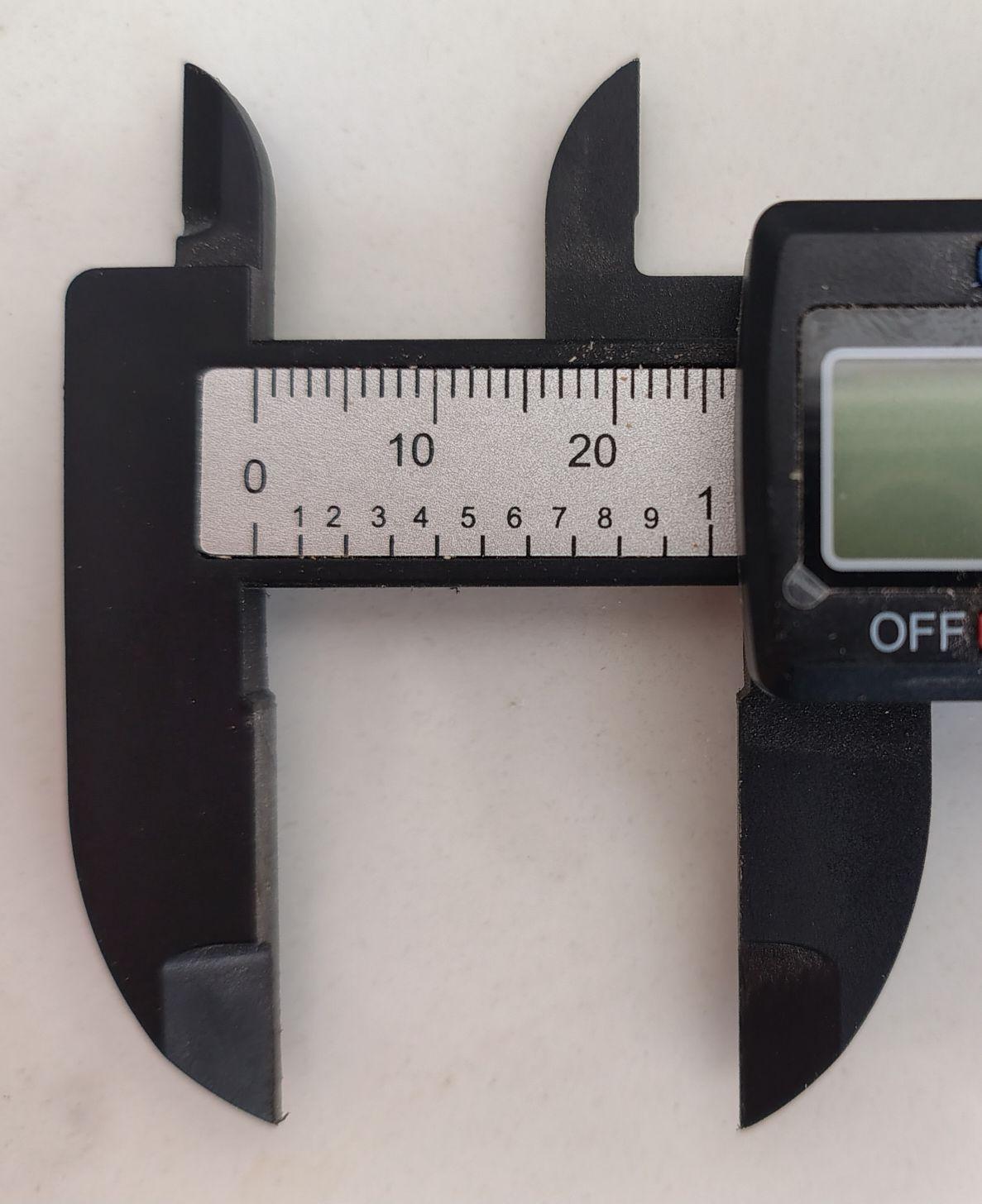
I’m reading a bit more than 0.2 inches, which does map to 3/8 roughly. Who in the world has ever used 0.2 inches? For what purpose? But I think, just as racism exists in both directions, i16n also exists in both directions. (TBH, seems like machinists in the US do use 0.2 inches and they are the more common calipers users probably!)
That’s it, that’s all the rant about intershitilization. Next time, don’t tell me about your i18n efforts, because it isn’t that, it comes short 2 letters. It is just i16n, and it will come for you some day too.
PS: I deliberately avoided talking about the i16n in tech. That is too long of a conversation and I’m not up for it today.
Leave a comment